Stay updated with the latest news, research activities, and events from NWRC that highlight our ongoing contributions to water science and sustainability.
Rip currents are natural phenomena arising from changes in seabed elevation, but they can also be influenced by human-made structures.
News
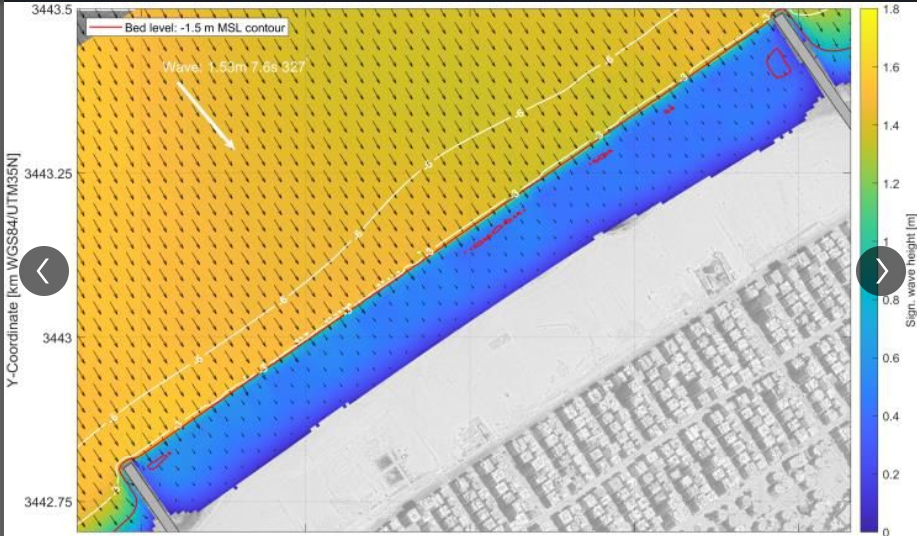
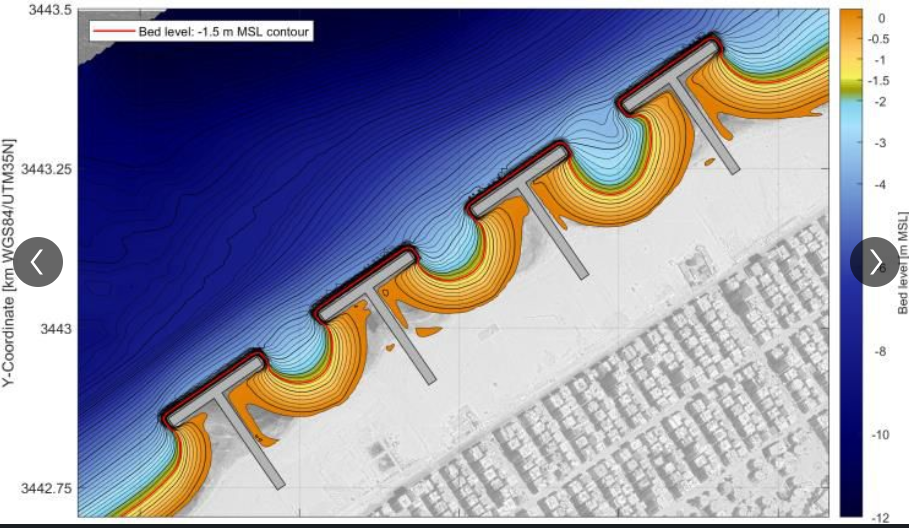
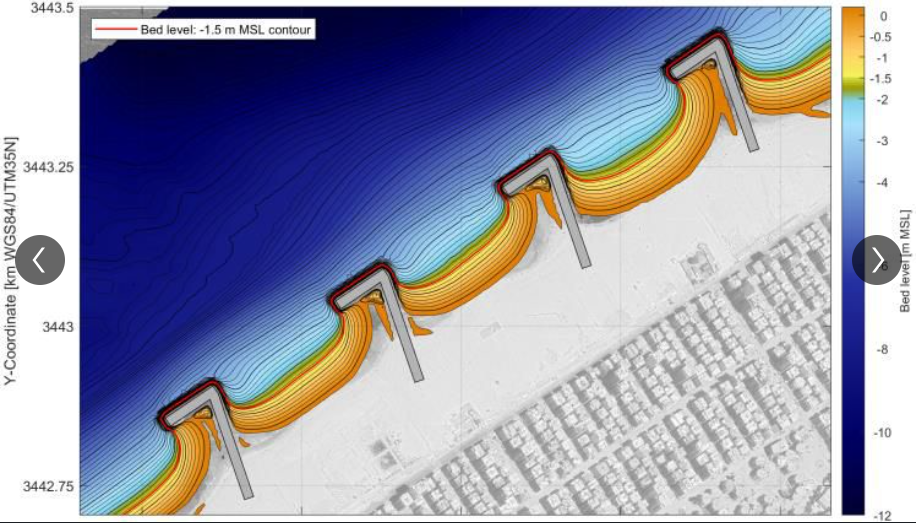
El Nakheel Beach, a public resort on the Mediterranean coast of Northern Egypt, has reported a high frequency of drowning and fatality incidents, with rip currents identified as the primary cause. Many beachgoers possess insufficient swimming skills and experience, resulting in dangerous conditions even at relatively low rip current velocities. To manage the rip currents threats, a joint research study was implemented through the Joint Cooperation in Applied Research Programme – JCAR (safe coasts project) activities. Where a coupled flow-wave Delft3D-FM model was developed to simulate nearshore hydrodynamics in relation to the key conditions contributing to reported drowning incidents. The study evaluated five potential alternatives for reducing rip current hazards, determining that three of these options could effectively decrease flow velocities in the impacted area. A dispersion and diffusion study is ongoing to assess the impact of the proposed alternatives on water circulation within the study area. The final solution will be further tested in the wave basin at HRI.


Related News & Events
17 April 2026
Hydraulics Research Institute has been instrumental in Mostakbal Misr Project, conducting comprehensive studies and detailed reviews on the design of barrage intake, gates, and open channels.
HRI’s expertise ensures seamless integration with the pumping stations, with assessments confirming the compatibility of the pumps within the overall system.Moreover, HRI has accurately investigated the water hammer protection system to guarantee optimal safety while effectively balancing efficiency, maintenance and...
Read More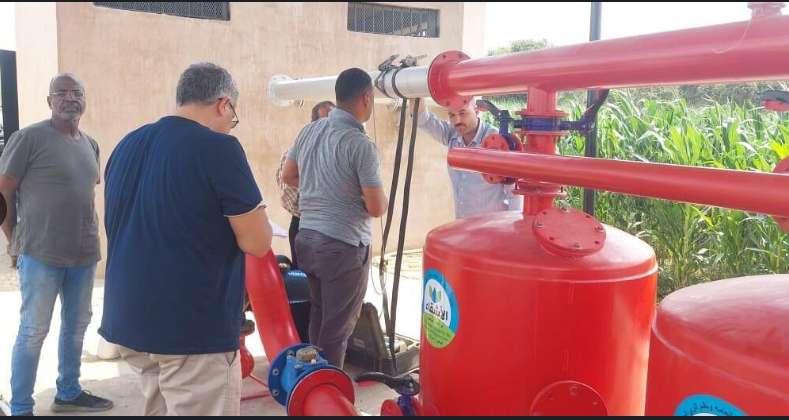
17 April 2026
Hydraulics Research Institute, in collaboration with the Drainage Research Institute and the Water Management Institute, is conducting a pioneering pilot project aimed at enhancing water conservation practices.
This initiative, part of the Joint Cooperation in Applied Research Programme – JCAR, focuses on shifting the sugar irrigation system from a flood irrigation method to a more efficient drip irrigation system in the Aswan Governorate. Calibration of control weirs...
Read More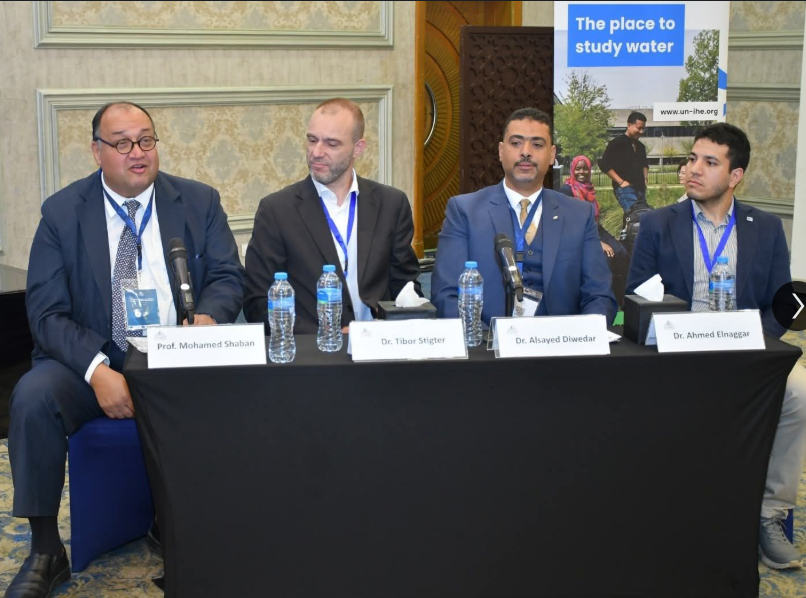
17 April 2026
The participation of Prof. Alsayed Diwedar, HRI deputy director in the session titled: “Advancing Water-Wise Agriculture: The IHE Delft-NWRC Partnership and Regional Collaborations in Africa and the Arab World”.
The session was organized jointly between IHE Delft Institute for Water Education and National Water Research Center during the CWW2025, Prof. Diwedar elaborated on the establishment of the Regional Training Center of HRI in 1996 and the achievements up till...
Read More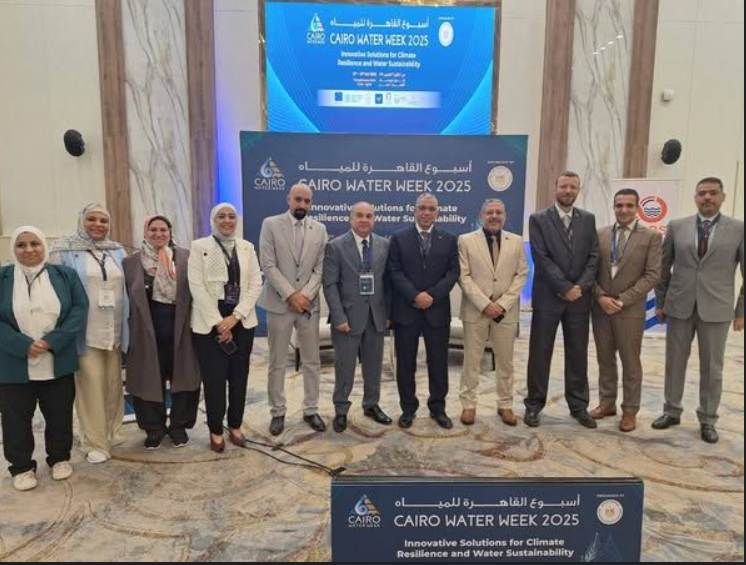
17 April 2026
A glimpse of the participation of researchers and engineers from the Hydraulics Research Institute and African trainees involved in the first training course currently being organized at the institute under the title “Hydraulic Models and Their Applications in River Management”
A glimpse of the participation of researchers and engineers from the Hydraulics Research Institute and African trainees involved in the first training course currently being organized at the institute under the title “Hydraulic Models and Their Applications in River Management”...
Read More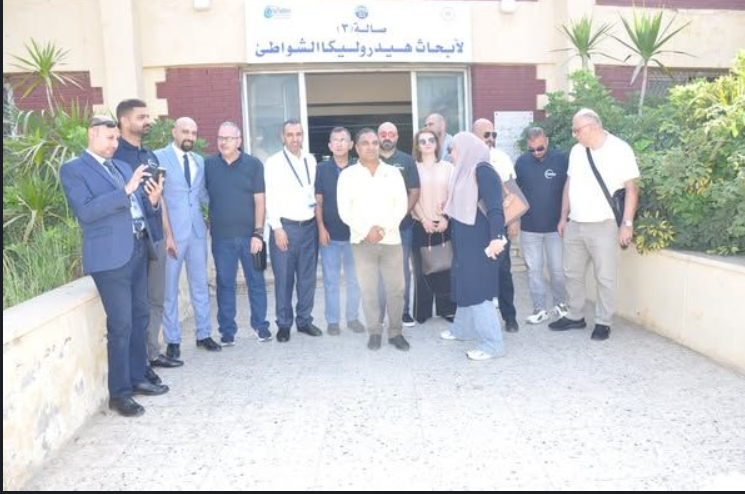
17 April 2026
The Hydraulic Research Institute at the National Water Research Center received a delegation of participants in the Eighth Cairo Water Week 2025 on Thursday, October 16, 2025, as part of the field activities accompanying the conference.
During the visit, accompanied by Mr. Ahmed Al-Dabaa, the Secretary-General of the institute, the delegation toured a physical model in the coastal research hall. They also have been introduced to the most important research projects being conducted by the institute...
Read More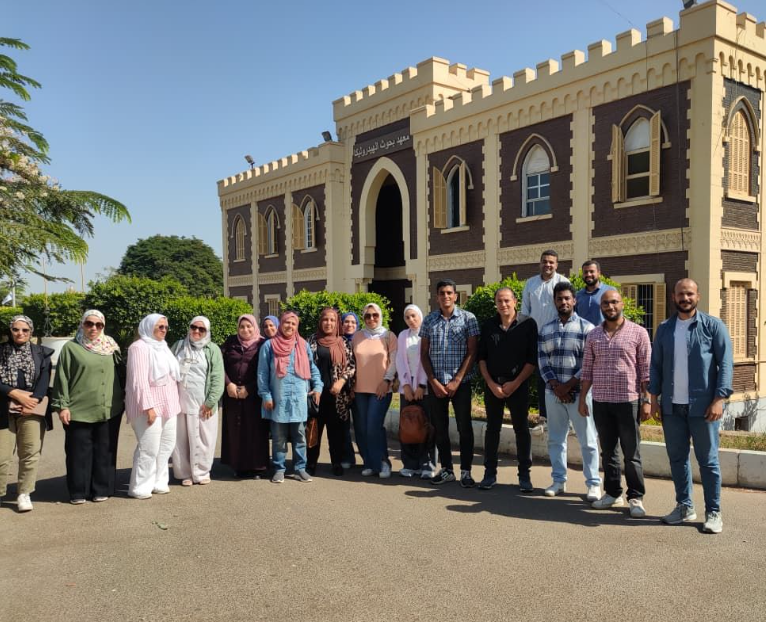
17 April 2026
Implementing training activities related to the study of “Improving Water Distribution in Egypt by Enhancing Water Management in Irrigation Canals”
According to the directives of Prof. Sherif Mohamady, President of the National Water Research Center, and within the framework of the Hydraulic Research Institute’s participation in implementing training activities related to the study of “Improving Water Distribution in Egypt by...
Read More